
What is Blanco Tequila?
Blanco Tequila is the purest and most authentic form of tequila, representing the unaged spirit that captures the true character of the blue agave plant. Understanding the meaning of blanco tequila starts with recognizing it as a crystal-clear tequila that is either bottled immediately after distillation or rested for no more than 60 days in stainless steel or oak barrels according to Mexican law (NOM-006-SCFI-2012). Aged tequilas (Reposado or Añejo) spend months or years developing flavor in wooden barrels, while Blanco highlights the natural sweetness, earthy tones, citrus, and herbal notes of cooked agave without any influence from wood.
Blanco Tequila holds a foundational position within the broader tequila family as the starting point from which all other tequila categories evolve. Mexican law requires all tequila to contain at least 51 percent blue agave sugars and to be produced within the Denomination of Origin regions, primarily Jalisco and designated areas in Guanajuato, Michoacán, Nayarit, and Tamaulipas. Premium Blanco tequilas labeled “100 percent agave” use only blue agave with no added sugars, ensuring the spirit reflects the true terroir and craftsmanship. Cultural tradition emphasizes the agave itself rather than barrel aging, and traditional production methods (tahona milling and copper pot distillation) create a vibrant, clean flavor profile that serves as the backbone for sipping neat or mixing into cocktails.
How does Mexican Law define Blanco Tequila?
Blanco Tequila is the purest expression of tequila, defined by Mexican Law under NOM-006-SCFI-2012, the official standard that regulates every stage of tequila production. The law requires Blanco Tequila to be distilled from blue agave (Agave tequilana Weber) and allows it to rest in oak barrels for no longer than 60 days, although most are bottled immediately after distillation to preserve the natural flavor of the agave. NOM-006-SCFI-2012 establishes two production categories (mixto tequila and 100% agave tequila). Mixto tequila contains at least 51% blue agave sugars, while 100% agave tequila uses only sugars from the blue agave plant. Authentic Blanco Tequila must originate from Mexico’s protected Denomination of Origin (DO) regions that cover the state of Jalisco and specific municipalities in Guanajuato, Michoacán, Nayarit, and Tamaulipas.
The Mexican government enforces the legal framework through the Consejo Regulador del Tequila (CRT), which certifies producers and assigns a NOM number displayed on every legitimate bottle. The CRT ensures compliance with strict production and geographic rules that safeguard tequila’s authenticity. The regulation preserves product quality and the cultural heritage behind the spirit. The agave’s slow growth before harvest gives Blanco Tequila a depth of character shaped by the land, soil, and climate. The combination of law and tradition guarantees that Blanco Tequila remains a clear, vibrant spirit that reflects the natural taste of cooked agave and honors the craftsmanship that defines Mexico’s national drink.
What is the official Mexican regulation (NOM) for labeling Blanco Tequila?
The official Mexican regulation for labeling Blanco Tequila is NOM-006-SCFI-2012, titled “Norma Oficial Mexicana para la Elaboración, Envasado y Etiquetado del Tequila”. The regulation defines the legal requirements for producing, bottling, and labeling Tequila, including Blanco Tequila. Labels must clearly display the type of Tequila, alcohol content, typically 35% to 55% Alcohol by Volume (ABV), origin (restricted to designated regions of Mexico), and the Norma Oficial Mexicana (NOM) number that identifies the certified distillery. Labels must comply with rules regarding denomination, authenticity, and ingredient disclosure to ensure transparency and protect consumers from misrepresentation.
How does Blanco Tequila reflect traditional Mexican drinking culture?
Blanco Tequila reflects traditional Mexican drinking culture by staying true to old-world methods passed down through generations in Jalisco, where the spirit originated. The production process honors Mexican craftsmanship by using fully mature blue agave handpicked from the mineral-rich red clay soils of the Highlands. The piñas are simmered in brick ovens for two days and crushed with a traditional tahona mill, a centuries-old stone wheel method that treats the agave with care. Natural fermentation and double distillation in copper stills produce a pure, crystal-clear spirit that captures the true essence of the agave plant without additives or shortcuts, reflecting the Mexican value of authenticity and quality over mass production. Blanco Tequila remains unaged to present the spirit as intended initially, smooth, clean, and honest, allowing flavors of crisp melon and pear to express the unique soil and climate of the Highlands. Sharing Blanco Tequila continues the Mexican tradition of celebrating life’s moments while connecting drinkers to the history, heritage, and craftsmanship of Mexico.
What to know before Purchasing a Blanco Tequila?
Know the authenticity markers, production standards, and quality indicators before purchasing a Blanco Tequila. Labels must display “100% agave” or “100% blue agave” certification, as bottles without the information contain mixtos that produce a different flavor profile due to added sugars. The NOM number on the bottle identifies the distillery and ensures compliance with Mexican regulatory standards. Domestic Mexican bottles show the “Hecho en México” label, while export versions carry CRT (Tequila Regulatory Council) hologram stickers as proof of authenticity. The liquid must be crystal clear without cloudiness, and brands using traditional copper pot stills produce smoother and more flavorful spirits than brands using industrial column stills when deciding to buy Blanco Tequila. Price reflects quality, with legitimate 100% agave blancos.
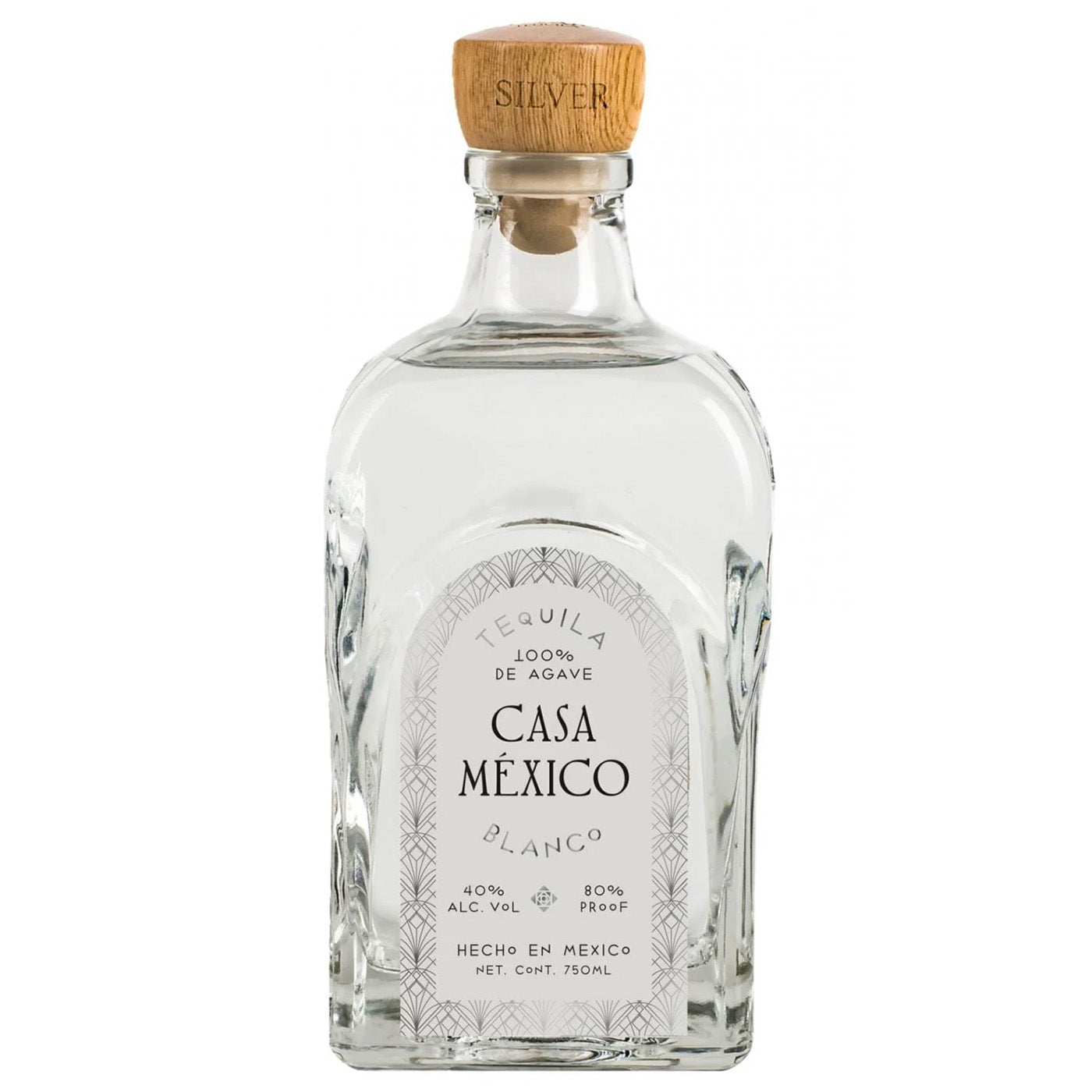
Casa Mexico Blanco Tequila
750ml • 40% ABV
$34.99
Shipping and discount codes are added at checkout.
Overview
What is Blanco Tequila?
Blanco Tequila (Silver Tequila) is an unaged spirit bottled immediately after distillation, representing
the purest expression of agave. Casa Mexico Blanco uses fully mature blue agave from Jalisco’s Highlands.
The piñas are cooked in brick ovens for two days, crushed using a tahona mill, naturally fermented,
and double distilled in copper stills. The result is a smooth, crystal-clear spirit with crisp agave character.
Flavor highlights include fresh agave, citrus, and subtle pepper. Award-winning recognition includes
Sip Awards Double Gold and Tequila & Mezcal Challenge Gold.
Perfect For
- Classic margaritas and palomas
- Sipping neat with lime and salt
- Mixed drinks and cocktails
- Tequila tastings
Product Attributes
- Agave Quality: 100% Blue Agave
- Grade: Premium Quality
- Aging: Unaged (Blanco)
- Alcohol Content: 40% ABV
- Origin: Jalisco, Mexico
Tasting Notes
- Aroma: Fresh agave, citrus, white pepper
- Taste: Clean agave sweetness, lime, gentle spice
- Finish: Smooth, warming, lingering agave
Key Purchase Considerations
- Choose 100% blue agave for quality
- Check NOM certification for authenticity
- Traditional production improves flavor
- Double distillation ensures smoothness
- Typical price range: $25–$60
Purchase Steps
- Research the brand and verify authenticity
- Check customer and expert reviews
- Decide usage (cocktails or sipping)
- Set a budget
- Buy from a trusted retailer
Why Choose Casa Mexico Blanco?
Crafted from 100% blue agave in Jalisco, Casa Mexico Blanco offers authentic production,
exceptional smoothness, and premium quality at an accessible price. Perfect for both
sipping and cocktails.
How can consumers verify the authenticity of Blanco Tequila bottles?
Consumers can verify the authenticity of Blanco Tequila bottles by checking the NOM number, a unique four-digit code issued by the Tequila Regulatory Council (Consejo Regulador del Tequila) that identifies the certified distillery where the spirit was produced. Casa Mexico Blanco displays NOM 1589 on its label, confirming its genuine origin in Mexico. Producers always include the “100% agave” statement on authentic bottles, indicating that they used only blue agave sugars during production. The CRT certification mark further verifies that the tequila meets all legal standards for production and labeling. Authentic bottles must have intact seals, clean and undamaged labels, and a crystal-clear liquid free of particles or sediment. Buyers must purchase only from reputable retailers to avoid counterfeit products or tampered bottles.
What labeling differences should buyers look for between domestic and export Blanco Tequilas?
Buyers of domestic Blanco Tequila should look for labels entirely in Spanish that display the word “Tequila,” the category and class, net content, alcohol percentage, and brand name on the main display surface. The label must include “100% agave” to confirm the tequila is not a mixto, and the NOM number must be present to identify the distillery and verify authentic Mexican production. Bottles must show no signs of tampering, labels must be intact, and the liquid inside must be crystal clear without sediment or foreign matter.
Buyers of export Blanco Tequila must look for bilingual or English labels that include “Hecho en México” (Made in Mexico) as required by regulations. Export bottles must display the word “Tequila,” the category (100% agave or mixto), the class (Blanco, Reposado, etc.), and the registered brand name on the main display surface. Labels include seals, tax stamps, or language-specific requirements depending on the destination country, and the NOM number must verify the distillery and authenticity.
How is Blanco Tequila made?
Blanco Tequila is made through a precise combination of traditional methods (brick oven cooking, tahona milling) and scientific processes (fermentation control, fractional distillation) that preserve the agave’s natural flavors. Producers harvest fully mature blue agave plants from mineral-rich red clay soils in the Highlands of Jalisco, Mexico, where jimadores handpick the piñas after seven to ten years of growth. Producers cook the piñas in brick ovens for two days, a thermal process that converts complex carbohydrates (fructans and inulins) into fermentable sugars while developing the agave’s characteristic flavors. Workers crush the cooked piñas in a tahona mill, a large stone wheel that extracts the sweet agave juice (aguamiel) while separating fibrous material from the liquid. The juice undergoes natural fermentation in tanks, where wild or cultivated yeast strains convert sugars into ethyl alcohol, producing a low-proof fermented liquid called mosto. Distillers transfer the mosto to copper alambique stills for double distillation, a heat-separation technique that purifies alcohol, concentrates flavor compounds like esters and aldehydes, and removes unwanted volatile substances. The first distillation produces ordinario at roughly 25% alcohol by volume, while the second distillation yields the finished Blanco spirit at 40% ABV with clean, crisp characteristics. Master distillers make precise cuts, separating the heart (corazón) from the heads and tails to ensure smoothness and quality. The crystal-clear Blanco Tequila remains unaged and is bottled immediately after dilution to proof, preserving the pure agave flavors without oak influence or color modification. Understanding How is Tequila Made highlights the careful balance of traditional methods with scientific precision, creating authentic 100% agave spirits ready for consumption.
What role does fermentation time play in shaping Blanco Tequila’s flavor?
Fermentation time directly controls the development of aromatic compounds and taste characteristics in shaping Blanco Tequila’s flavor by determining how yeast converts agave sugars into ethanol and secondary metabolites. Longer fermentation periods allow the production of esters, aldehydes, and higher alcohols, which contribute fruit-forward notes (melon, pear, and citrus) and subtle earthy undertones that add depth to the spirit. Shorter fermentation periods produce cleaner, crisper profiles with prominent fresh agave characteristics. Yeast strain selection and precise temperature management influence the rate of metabolite formation, making fermentation time essential for consistent flavor. Natural fermentation of Casa Mexico Blanco balances time and temperature to create clean, crisp flavors with distinct melon and pear notes. Distillers must monitor progress carefully, as stopping fermentation too early limits flavor development, while extending it too long risks off-flavors from yeast stress or contamination.
How do traditional vs. modern production methods influence Blanco Tequila quality?
Traditional and modern production methods directly influence Blanco Tequila quality by shaping flavor complexity, extraction efficiency, cooking consistency, and the character of the spirit. Brick ovens slowly cook agave piñas over 48 to 72 hours, preventing burnt sugars while creating rich caramel and earthy flavors. Modern autoclaves use high-pressure steam to cook piñas for 7 to 12 hours, which produces less flavor depth. Tahona mills crush roasted agave with volcanic stone wheels, producing sweeter, velvety juice with mineral and terracotta notes. Roller mills extract more liquid efficiently, resulting in bright, citrusy flavors but less richness. Diffuser technology rapidly extracts sugars from raw agave, creating spirits with simpler flavor profiles that lack traditional complexity. Copper alambique stills remove sulfur and bitterness during double distillation, producing smoother, more balanced tequila compared with stainless steel stills. Casa Mexico Blanco uses brick ovens, tahona mills, and copper pot stills to preserve authentic agave character, delivering clean, crisp flavors with melon and pear notes, demonstrating that traditional methods prioritize nuanced flavor and quality over speed and efficiency.
What is the role of agave piñas in Blanco Tequila production?
Agave piñas are the core source of natural sugars and flavors in Blanco Tequila production, which determines the spirit’s smoothness, sweetness, and overall flavor profile. Fully mature piñas handpicked from mineral-rich red clay soils in the Highlands of Jalisco provide concentrated starches that convert into fermentable sugars during cooking. Brick ovens slowly transform the piñas’ starches into a sweet, flavorful juice. Tahona mills crush the cooked hearts to extract the liquid that becomes Blanco Tequila. Higher quality piñas from well-grown plants produce naturally sweeter juice, creating a crystal-clear spirit with clean, crisp flavors of melon and pear after double distillation in copper stills. The quality of the piñas directly influences aroma, mouthfeel, and balance, making them essential for premium Blanco Tequila. Understanding what is Agave highlights that piñas store the plant’s energy and flavor, and careful selection ensures the tequila reflects the full potential of the agave plant.
How does the distillation process affect the flavor of Blanco Tequila?
The distillation process affects the flavor of Blanco Tequila by purifying and concentrating the natural agave flavors while removing compounds that sometimes produce harsh or bitter notes. Copper stills heat the fermented agave juice, allowing alcohol to evaporate and separate from water and unwanted substances. Double distillation refines the spirit, with the first distillation removing heavy impurities to create a rough base and the second distillation producing a smoother, cleaner taste. Copper reacts with sulfur compounds, eliminating unpleasant flavors and allowing fresh, crisp notes of melon and pear to emerge. The careful balance between removing impurities and preserving delicate agave character illustrates how alcohol is made. The final Blanco Tequila is a crystal-clear spirit at 40% ABV that reflects the natural quality of the agave and the precision of the distillation process.
How long is Blanco Tequila aged before bottling?
Blanco Tequila is not aged before bottling. The spirit is bottled immediately after double distillation or allowed to rest for less than two months in stainless steel tanks to let the flavors settle. Skipping the barrel-aging process preserves the crystal-clear appearance and the pure, fresh taste of the blue agave. Casa Mexico Tequila’s Blanco showcases clean, crisp flavors of melon and pear that come directly from the agave and the distillation process. Immediate bottling ensures the tequila reflects the authentic essence of the agave without any influence from wood.
Why is Blanco Tequila referred to as “Silver Tequila”?
Blanco Tequila is referred to as “Silver Tequila” because of its crystal-clear, transparent appearance that resembles silver or pure water. The name reflects the fact that Blanco is either unaged or rests for less than two months in stainless steel containers, preventing any contact with wooden barrels that add color. Blanco maintains its pristine, colorless look directly from the distillation process, unlike aged tequilas that develop golden or amber hues from oak. The terms Blanco, meaning “white” in Spanish, and Silver describe the same style of tequila and appear on bottles and menus. Casa Mexico Tequila’s Silver exemplifies the pure, unaged spirit, showcasing the natural clarity that signals authenticity and purity. The see-through quality indicates that the tequila retains the fresh, clean flavors of blue agave without influence from wood aging or additives.
What Flavors are typically associated with Blanco Tequila?
Flavors that are typically associated with Blanco Tequila are listed below.
- Agave/Earthy: Provides the core flavor from the blue agave plant, giving a sweet, vegetal taste with slight earthiness and herbaceous hints, similar to fresh-cut grass or cooked vegetables.
- Citrus: Adds bright, zesty notes of lime, lemon, or grapefruit, giving a clean and lively taste on the tongue.
- Pepper/Spice: Introduces a subtle peppery kick or mild spiciness, creating a pleasant tingle that adds complexity without being overwhelming.
- Melon: Offers sweet, soft flavors reminiscent of honeydew or cantaloupe, derived from high-quality agave grown in mineral-rich soils.
- Pear: Contributes delicate sweetness and smoothness, making the tequila easy to sip and enjoyable.
- Mineral/Wet Stone: Reflects the soil of the agave’s growth with subtle mineral notes, giving a pure and crisp character.
- Sweet/Honey: Shows natural sweetness from cooked agave sugars with light honey or caramel notes, balancing sharper flavors.
- Herbal/Floral: Provides fresh herbal hints (mint or basil) and light floral notes, adding aromatic depth and complexity to the tequila.
How do different cooking methods (brick ovens vs autoclaves vs diffusers) affect Blanco Tequila flavor?
The different cooking methods that affect Blanco tequila flavor are listed below.
- Brick Ovens (Traditional Method): Slow cooking agave piñas in brick ovens for two or more days develops deep, complex flavors with rich caramelization of natural sugars. The traditional method produces a sweeter, smoother tequila with pronounced cooked agave notes and subtle hints of vanilla or butterscotch.
- Autoclaves (Modern Steam Method): High-pressure steam cooks agave in 8 to 12 hours, creating a cleaner but less complex flavor profile. The tequila has lighter agave notes and reduced sweetness, affecting the tequila flavors and aromas experienced in the final spirit.
- Diffusers (Industrial Extraction): Shredding raw agave and extracting sugars with hot water and enzymes bypasses traditional cooking methods.The resulting spirit has a neutral taste, lacks characteristic cooked agave flavors, and requires additives to produce noticeable flavor.
What chemical compounds in agave contribute to Blanco Tequila’s signature notes?
The chemical compounds in agave that contribute to Blanco Tequila’s signature notes are listed below.
- Fructans (Natural Sugars): Fructans in the agave piña break down into simple sugars during cooking. The sugars provide the sweet base that yeast converts into alcohol, creating the natural sweetness in Blanco Tequila.
- Isoamyl Alcohol (Fruity Notes): Isoamyl alcohol forms during fermentation. It gives Blanco flavors of banana, pear, and tropical fruits, adding a pleasant fruity aroma.
- Ethyl Acetate (Fruity Esters): Ethyl acetate develops when alcohol and acids combine during fermentation. It produces light, sweet aromas reminiscent of pear, apple, and melon, contributing complexity to the tequila’s bouquet.
- Terpenes (Herbal/Floral): Terpenes exist naturally in agave. They provide herbal notes (mint and eucalyptus), along with subtle floral hints, giving Blanco a bright and clean character.
- Phenolic Compounds (Spicy/Earthy): Phenolic compounds reside in the agave plant. They create peppery, earthy, and slightly vegetal flavors, giving depth and the distinctive agave taste unique to tequila.
- Furfural (Caramelized Notes): Furfural forms during the caramelization of agave sugars in brick ovens. It adds subtle sweet, toasted, and slightly nutty flavors that increase complexity.
- Aldehydes (Fresh/Green): Aldehydes develop as volatile compounds during fermentation. They contribute grassy and green vegetable notes, reflecting the living agave plant and giving Blanco a crisp, authentic character.
- Organic Acids (Brightness): Organic acids (acetic and lactic acids) develop during fermentation. They provide a refreshing tanginess that balances sweetness and makes the tequila taste lively and clean.
What is the alcohol percentage range of Blanco Tequila?
The alcohol percentage of Blanco Tequila ranges from 35% to 55% ABV, with most commercial bottles bottled around 38% to 40% ABV. Mexican law mandates that all tequila fall within the alcohol content range, with variations determined by the distillation process and water dilution before bottling. The fermentation conditions produce a low-alcohol wort containing 4 to 9% ethanol from agave sugars, and double distillation increases ethanol concentration. The first distillation creates ordinario at 20 to 30% ABV, while the second distillation results in the final Blanco at 38 to 68% ABV before water is added to adjust the strength. Temperature during fermentation affects alcohol levels and flavor compounds, and the carbon-to-nitrogen ratio in the fermentation medium influences total ethanol production. Distilleries dilute high-proof distillates to achieve the desired ABV for their market, directly impacting the tequila alcohol percentage and the flavor profile of the final Blanco Tequila.
How does Blanco Tequila’s appearance differ from aged tequilas?
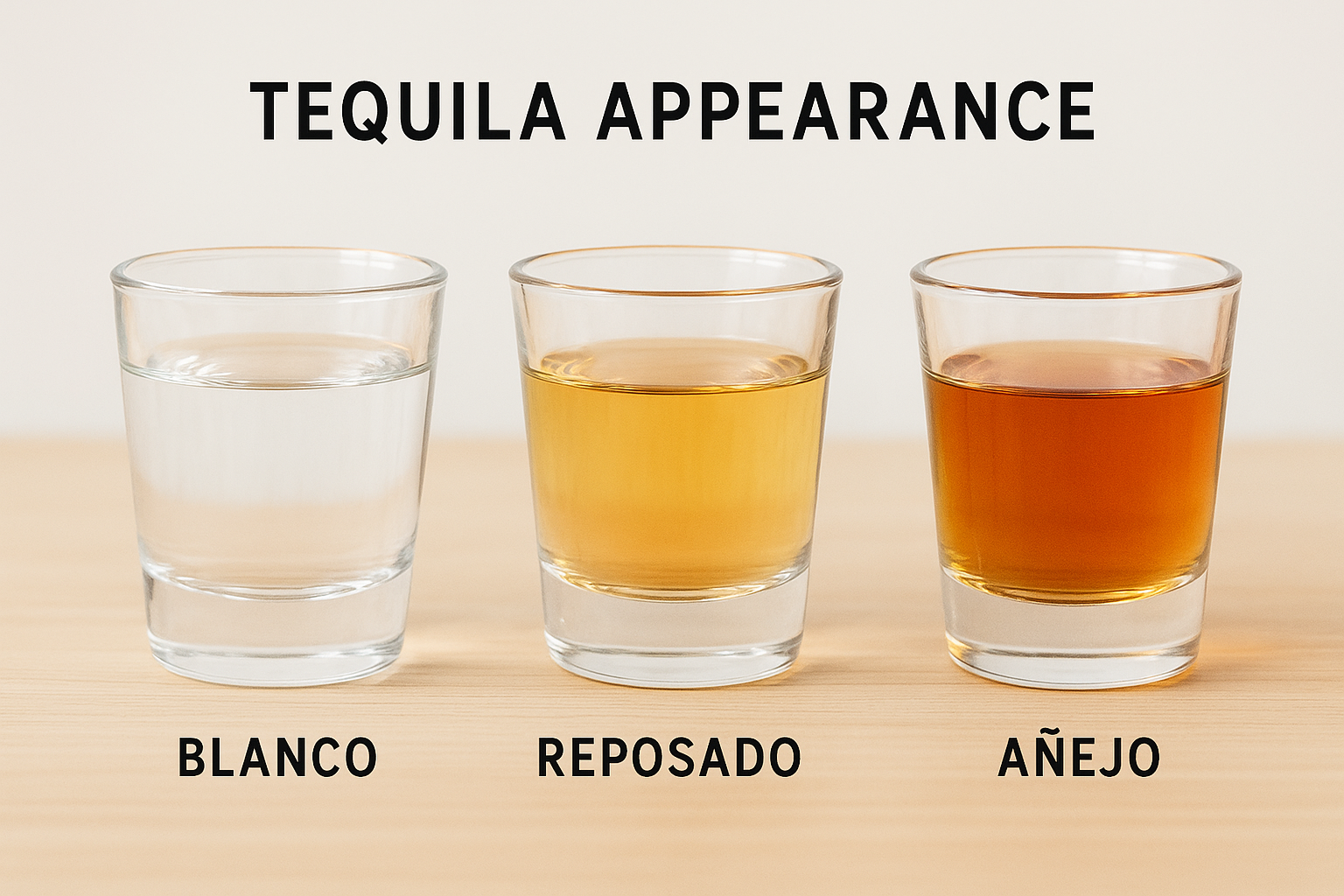
Blanco Tequila’s appearance differs from that of aged tequilas through its crystal-clear, transparent look that resembles pure water or silver. Aged tequilas display colors ranging from pale straw to dark amber, depending on the time spent in oak barrels. Barrel aging causes the color change because Reposado tequilas rest in oak for 2 to 12 months, producing a light golden tint, while Añejo tequilas age for 1 to 3 years, developing deep amber or copper tones. Blanco remains perfectly see-through with no cloudiness, while aged tequilas show warm reflections and a slightly thicker appearance from compounds extracted from wood. The clarity of Blanco signals fresh agave flavors without wood influence, while darker aged tequilas indicate layered tastes of vanilla, caramel, and oak. For example, a glass of Blanco Tequila appears colorless and water-like. A Reposado displays a soft golden hue, and an Añejo shows a rich amber color, visually representing the differences in maturation and flavor intensity.
How does terroir (region of agave) influence Blanco Tequila’s flavor profile?
Terroir (region of agave) influences Blanco Tequila’s flavor profile by determining the soil type, mineral content, and climate where the agave grows. Agave from the Highlands of Jalisco, Mexico, with red clay soils rich in minerals, produces Blanco Tequila with naturally sweet, fruity notes (melon and pear). The regional climate and soil characteristics shape the plant’s sugar levels and moisture, directly affecting the crispness, smoothness, and natural flavors of the final tequila.
Casa Mexico Blanco sourced from these highland soils shows a clean, bright appearance and fresh, vibrant taste. Agave from lower-altitude or less mineral-rich regions creates earthier or spicier flavor profiles.
What are the differences between 100% agave Blanco and mixto Blanco?
The differences between 100% agave Blanco and mixto Blanco are listed below.
- Agave Content: 100% agave Blanco is made entirely from blue agave sugars. Mixto Blanco contains a minimum of 51% agave sugars, with the remaining sugars coming from other sources, usually cane sugar.
- Flavor Profile: 100% agave Blanco has a naturally sweet, crisp, and fruity taste with clear agave notes. Mixto Blanco tastes harsher and less complex due to added sugars.
- Purity: 100% agave Blanco delivers a clean, natural spirit with no artificial fermentation ingredients. Mixto Blanco includes additives to balance flavors during fermentation.
- Mouthfeel: 100% agave Blanco has a smooth, rounded mouthfeel. Mixto Blanco feels thinner or sharper on the palate.
- Aging Potential: 100% agave Blanco ages into Reposado or Añejo while maintaining its signature agave flavors. Mixto Blanco is less suited for aging because added sugars affect maturation.
- Regulatory Labeling: 100% agave Blanco carries the label “100% de agave” on the bottle. Mixto Blanco appears simply as tequila without the 100% agave designation.
What differentiates Blanco Tequila from aged types like Reposado or Añejo?
Blanco Tequila differs from aged types like Reposado or Añejo primarily through the absence of barrel aging, which preserves its clear appearance and fresh, natural agave flavors. Aging in oak barrels gives Reposado a light golden color and Añejo a deeper amber hue, while adding woody, caramel, and vanilla notes that are absent in Blanco. The flavor profile of Blanco is bright, crisp, and fruity, highlighting notes (melon or pear), whereas aged tequilas develop richer, more complex flavors from interaction with the wood. Blanco retains an aromatically pure, fresh agave scent, while Reposado and Añejo carry additional aromas of oak, spices, and barrel maturation. Mouthfeel differs, with Blanco offering a smooth, clean texture, and aged tequilas presenting a fuller, warmer, and more rounded sensation. Significant differences between Blanco vs Reposado arise from aging, affecting their color, flavor, aroma, and texture.
How does Blanco Tequila compare with Mezcal in terms of production and taste?
Blanco Tequila is different compared with Mezcal in terms of production and taste, mainly because of the agave preparation and distillation methods. Blanco Tequila uses blue agave, which is steamed or baked in ovens before crushing and fermenting, producing a clean, bright, and slightly sweet flavor. Mezcal comes from various types of agave and is roasted in underground pits, creating a distinctive smoky aroma and earthy flavor. Blanco Tequila emphasizes fresh, fruity, and crisp notes, while Mezcal highlights bold, smoky, and complex flavors. The main differences lie in the cooking method of the agave and the resulting flavor profile, with Blanco focusing on purity and freshness and Mezcal offering a smoky, earthy character.
What are the most popular cocktails made with Blanco Tequila?
The most popular cocktails made with Blanco Tequila are the Margarita, Paloma, Tequila Sunrise, and Blanco Mojito. The Margarita combines Blanco Tequila with lime juice and orange liqueur for a crisp, tangy, and refreshing drink. The Paloma mixes Blanco Tequila with grapefruit soda or juice, creating a slightly bitter and citrusy cocktail perfect for warm weather. Tequila Sunrise layers Blanco Tequila with orange juice and grenadine, producing a sweet and visually striking drink. The Blanco Mojito replaces rum with Blanco Tequila, combining it with lime, mint, and soda for a bright and herbal flavor. The classic cocktails with tequila showcase the clean, fresh taste of Blanco while allowing its natural agave notes to shine in mixed drinks.
How does the choice of yeast affect 100% agave Blanco vs mixto Blanco fermentation?
The choice of yeast affects 100% agave Blanco vs mixto Blanco fermentation by influencing the speed, flavor, and complexity of the final tequila. Yeast ferments only the natural sugars from blue agave in 100% agave Blanco, producing a clean, bright, and fruity profile that highlights the plant’s natural flavors. Mixto Blanco uses yeast to ferment a mixture of agave sugars and additional sugars, which creates faster fermentation but results in harsher, less complex flavors. Yeast selection impacts aroma and mouthfeel, as carefully chosen strains improve smoothness and subtle fruity or floral notes in 100% agave Blanco, while mixto fermentation yields a simpler, sharper taste.
What foods pair well with Blanco Tequila?
Foods that pair well with Blanco Tequila are fresh seafood, ceviche, grilled chicken, tacos with light fillings, and citrus-based salads. Fresh seafood complements the bright, crisp flavors of Blanco, while ceviche’s tangy citrus notes match the tequila’s natural sweetness. Grilled chicken and lightly seasoned tacos allow the clean agave taste to shine without overpowering the dish. Citrus-based salads increase the fruity and zesty qualities of Blanco Tequila, creating a refreshing combination. These pairings highlight the tequila’s smoothness, crispness, and natural agave flavors, making each sip and bite balanced and enjoyable.
How does price vary between entry-level and premium Blanco Tequilas?
Price varies between entry-level and premium Blanco Tequilas from roughly $15 to $60 per 750ml bottle, with production methods creating the largest gap in cost. Entry-level Blanco Tequilas use modern industrial autoclaves to cook agave and mechanical shredders to extract juice, which speeds up production and lowers expenses. Premium Blanco Tequilas employ traditional brick ovens (hornos) that cook agave for two days and use tahona mills, large stone wheels that slowly crush roasted agave piñas, requiring more labor and time. The fermentation process further differentiates prices. Entry-level bottles use commercial yeasts and accelerants to finish fermentation within 24 to 48 hours. Premium varieties rely on wild, natural yeasts that take 3 to 7 days, producing deeper flavor complexity. Distillation methods influence cost, as entry-level producers use stainless steel column stills for efficiency, whereas premium brands use copper pot stills (alambique) that require skilled distillers and produce smaller, refined batches.
Agave sourcing location adds to the pricing difference. Premium bottles source blue agave from the Highlands of Jalisco, where mineral-rich red clay soils produce sweeter, more aromatic plants. Entry-level Blanco uses agave from the valley lowlands. The combination of slower traditional cooking, labor-intensive extraction, extended natural fermentation, specialized distillation, and high-quality agave creates the main pricing gap between entry-level and premium Blanco Tequilas. The Tequila Statistics indicate that each of these factors affects the price of a bottle.
What factors contribute most to the premium pricing of Blanco Tequila?
Factors that contribute most to the premium pricing of Blanco Tequila are listed below.
- Agave Source and Quality: Premium Blanco Tequila uses 100% blue agave harvested from the Highlands of Jalisco, where mineral-rich red clay soils create sweeter and more complex plants. Allowing agave to reach full maturity over 7 to 10 years increases flavor quality and production costs.
- Traditional Cooking Methods: Brick ovens cook agave piñas slowly for two full days, caramelizing natural sugars and developing deeper flavors. Extended cooking requires more fuel, labor, and facility space, raising production expenses compared with modern autoclaves.
- Tahona Mill Extraction: Large volcanic stone wheels called tahona mills slowly crush cooked agave, preserving essential oils and fibers that contribute to taste. The method is more labor-intensive and time-consuming than mechanical shredders, making it more costly but producing higher-quality flavor.
- Natural Fermentation Process: Wild yeasts ferment agave juice over 3 to 7 days without additives, creating more decadent flavors. Longer fermentation demands larger tanks and extended facility use, which increases overhead costs compared with faster, commercial yeast-driven fermentation.
- Copper Pot Still Distillation: Double distillation in copper alambique stills produces smoother, cleaner spirits by removing sulfur compounds. Skilled operators must carefully monitor temperature and cuts, adding labor costs, while column stills used in budget production are less precise and less expensive.
How do artisanal and mass-market Blanco Tequilas differ in price and availability?
Artisanal and mass-market Blanco Tequilas differ in price and availability through production scale and distribution reach. Artisanal Blanco Tequilas are produced in limited quantities using traditional methods, priced between $40 and $70 per bottle. Mass-market Blanco Tequilas use large-scale industrial processes and sell for $15 to $30 per bottle. Small-batch artisanal producers control every step of production, from harvesting agave to distillation, creating richer and more complex flavors but limiting total output. Mass-market operations rely on automated systems with mechanical shredders, autoclaves, and column stills, allowing production of hundreds of thousands of liters monthly and widespread distribution to major retailers, supermarkets, and chain restaurants.
Artisanal Blanco Tequilas are available through specialty liquor stores, upscale bars, and direct-to-consumer channels due to smaller production volumes, while mass-market bottles appear in nearly every liquor outlet nationwide. Limited artisanal production and focused distribution mean consumers must actively seek these bottles, whereas mass-market options are readily accessible. Regional availability differs, as artisanal expressions concentrate in metropolitan areas, where consumers value traditional craftsmanship and are willing to pay premium prices for authentic Blanco Tequila.
Why do bartenders often prefer Blanco Tequila for cocktails?
Bartenders often prefer Blanco Tequila for cocktails because the spirit is agave-forward, with prominent notes of citrus and pepper that work well in shaken drinks. Blanco maintains the natural taste of agave by skipping the barrel-aging process, allowing vibrant agave flavors to take center stage. The bright, earthy, and slightly sweet profile serves as a versatile canvas for traditional and modern cocktails. Aged varieties (Reposado and Añejo) absorb oak flavors during aging, which overwhelm delicate ingredients or clash with citrus elements commonly used in mixed drinks. Blanco’s freshness and liveliness highlight lime juice, grapefruit, ginger beer, and other mixers without competing against woody or vanilla notes. Its neutral yet distinct flavor complements a wide range of ingredients, from citrus and herbs to sweet fruits and spices. Professional mixologists value Blanco Tequila for building balanced cocktails where each component contributes equally. The versatility extends to refreshing highballs and spirit-forward stirred drinks, making Blanco the most practical choice for bar programs serving diverse cocktail menus.
How do professional mixologists evaluate Blanco Tequila for cocktails?
Professional mixologists evaluate Blanco Tequila for cocktails by examining the agave profile, production authenticity, and flavor versatility. Andrea Grujic, bartender at Brooklyn’s Fandi Mata, explains that Blanco “tends to be agave-forward, with prominent notes of citrus and pepper that bode very well for shaken cocktails,” and she looks for bottles with the “100% de agave” mark while ensuring the tequila has not been sweetened or contains additives.
Liana Oster, bar director at Side Hustle at The NoMad Hotel London, considers regional differences when selecting tequila, saying, “If I want to play around with a blanco tequila that boasts more floral and delicate notes, I lean towards something from the Highlands,” while “if I wanted something a bit more herbaceous, earthy and green, I would favor the Lowlands.” Colin Overett from Union Lodge No.1 evaluates tequila by flavor balance, stating, “Arette Blanco has wonderful notes of herbs and citrus, with a crispness (like green apples) and subtle dryness. I feel Arette has an overall balance that can contribute nicely to anything you might want to create.”
Christine Wiseman, beverage director for Bar Lab, values high minerality and black pepper character as key evaluation factors. Charles Joly, mixologist and co-founder of Crafthouse Cocktails, emphasizes production methods, noting, “Finding an oven-cooked, pot-stilled tequila at around $25 isn’t an easy task these days,” showing how traditional techniques influence quality and perceived value.
Why is Blanco Tequila often used as the base for cocktails worldwide?
Blanco Tequila is often used as the base for cocktails worldwide because it skips the barrel-aging process, allowing vibrant agave flavors to take center stage. The spirit is bottled after distillation, offering a strong agave taste with notes of pepper, herbs, and citrus that blend seamlessly with fresh ingredients commonly found in mixed drinks. Its pure agave sweetness and unaged profile make it ideal for classic cocktails like Margaritas, which gained popularity in the 1940s, and modern creations (Palomas or tequila martinis).
Blanco Tequila is the purest expression of the agave plant and does not spend any time in oak barrels, unlike Añejo, Extra Añejo, or Reposado, preserving its bright, earthy, and slightly sweet flavor. The clean profile serves as a versatile canvas for creativity, allowing bartenders to combine it with citrus, herbs, tropical fruits, or spicy elements without overpowering the drink. Aged varieties develop oak, vanilla, and caramel characteristics that dominate delicate mixers, whereas Blanco’s clarity lets each ingredient contribute equally to the final flavor balance. The versatility and freshness make Blanco Tequila the preferred choice for cocktail menus worldwide.
Which major tequila brands are known for their Blanco Tequila?
Major tequila brands known for their Blanco Tequila start with Casa Mexico Tequila, a standout producer that has earned serious recognition in the industry. Casa Mexico Blanco uses fully mature blue agave handpicked from the mineral-rich red clay soils of Jalisco’s Highlands, where agave develops rich sweetness and distinctive character. The brand follows traditional methods, cooking piñas in brick ovens for two days, crushing them in a tahona mill, naturally fermenting the juice, and double distilling in copper alambique stills. The result is a smooth, crystal-clear spirit with clean, crisp flavors and notes of melon and pear. Casa Mexico Blanco has earned awards such as the 2023 Sip Awards Double Gold, 2022 Tequila & Mezcal Challenge Gold, and Cigar & Spirit 2020 Double Gold. Casa Mexico represents the ideal combination of 100 percent agave, traditional craftsmanship, and authentic Mexican heritage, making it a top choice among the best tequila brands.